
Michigan Inground Pool Builder for Vinyl, Fiberglass & Gunite Pools
Building an inground pool starts with choosing the right type of pool for your property, budget, and priorities.
Serving Oakland, Macomb, Lapeer, Genesee, Livingston, and Wayne counties.
DRS Pool & Spa builds vinyl liner, fiberglass, and gunite pools from our home base in Oxford, Michigan. Each has real advantages. Each has tradeoffs. And there is no reason to push every homeowner toward the same option.
Some homeowners want to keep the initial investment lower. Some prioritize installation speed and easier maintenance. Others have a property or design that requires the flexibility of gunite.
We will walk you through those differences, look at your property, and help you understand what makes sense before you commit to a build.
Which Type of Inground Pool Is Right for You?
The three construction methods are different from the ground up. Understanding those differences early makes it easier to decide where you want to invest and what you are willing to compromise on.
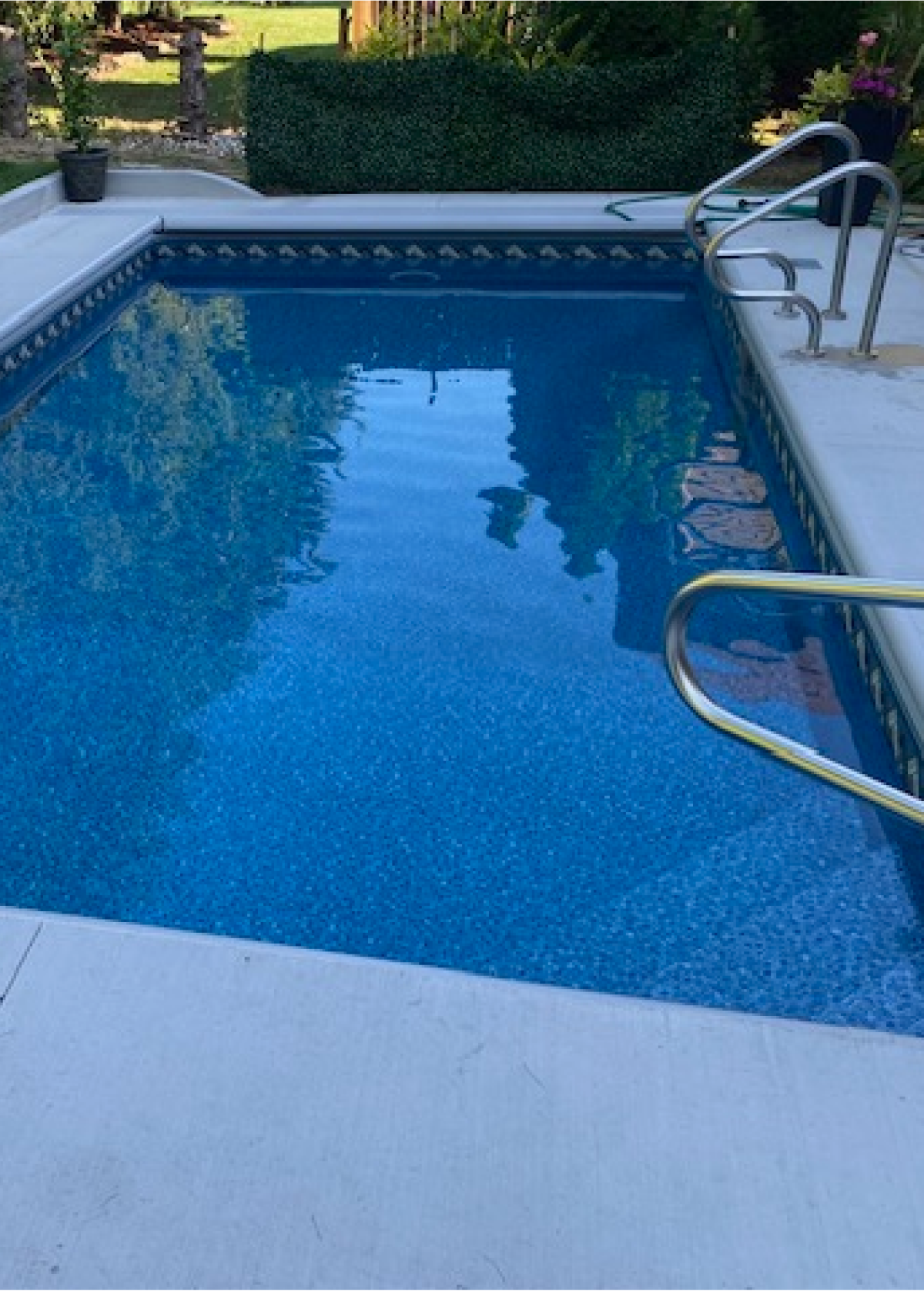
Vinyl Liner Pools
BEST FOR
Homeowners looking for a lower entry cost, flexible shapes, and a surface that can be replaced later.
Vinyl liner pools make up the largest share of the pools DRS Pool & Spa builds.
Our vinyl pools are constructed with Alpha steel wall panels and finished with GLI liners, giving homeowners a wide selection of shapes and liner patterns without moving into the cost and construction requirements of gunite.
Cost
Generally the lowest initial investment of the three pool types. Final pricing depends on size, shape, site conditions, decking, equipment, and selected features.
Timeline
Typically faster to build than gunite. The actual schedule depends on permitting, site preparation, weather, pool design, and project scope.
Durability
The structural pool and liner are separate components. The liner will eventually need replacement, but that also means the interior surface can be renewed without rebuilding the entire pool.
Customization
More flexible than a premanufactured fiberglass shell. Homeowners can choose from multiple pool shapes, sizes, steps, and GLI liner patterns.
Maintenance
The smooth vinyl surface is relatively easy to care for. Because the liner is a replaceable component, sharp objects and damage to the liner should be avoided.
Fiberglass Pools
BEST FOR
Homeowners who prioritize installation speed, a smooth surface, and lower ongoing chemical demand.
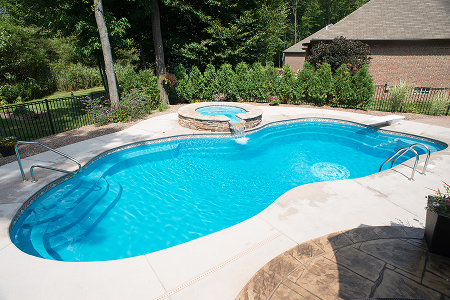
A fiberglass pool is manufactured as a complete shell before it reaches your property. DRS Pool & Spa installs pools from Latham and Leading Edge, giving homeowners access to established model collections with built-in steps, benches, tanning ledges, and other configurations.
Cost
Varies by shell size, model, site access, decking, equipment, and additional features. Fiberglass generally falls between the entry point of vinyl liner construction and highly customized gunite projects, although the specifics of the project matter.
Timeline
One of fiberglass’s biggest advantages. Because the shell arrives manufactured, installation can move faster than a gunite build once excavation and site preparation begin.
Durability
The pool’s interior is part of the manufactured fiberglass shell rather than a replaceable liner.
Customization
You choose from available manufacturer models rather than designing the shell from scratch. That provides plenty of options, but less dimensional freedom than vinyl or gunite.
Maintenance
The smooth, non-abrasive surface is comfortable underfoot and generally has lower chemical demand than more porous pool surfaces.
There is one important qualifier: the shell has to reach your backyard.
Fiberglass pools arrive at the property in one piece. Gates, overhead obstructions, neighboring structures, lot configuration, and other access conditions can affect which shell sizes can physically be delivered and installed. We evaluate that before recommending a model.
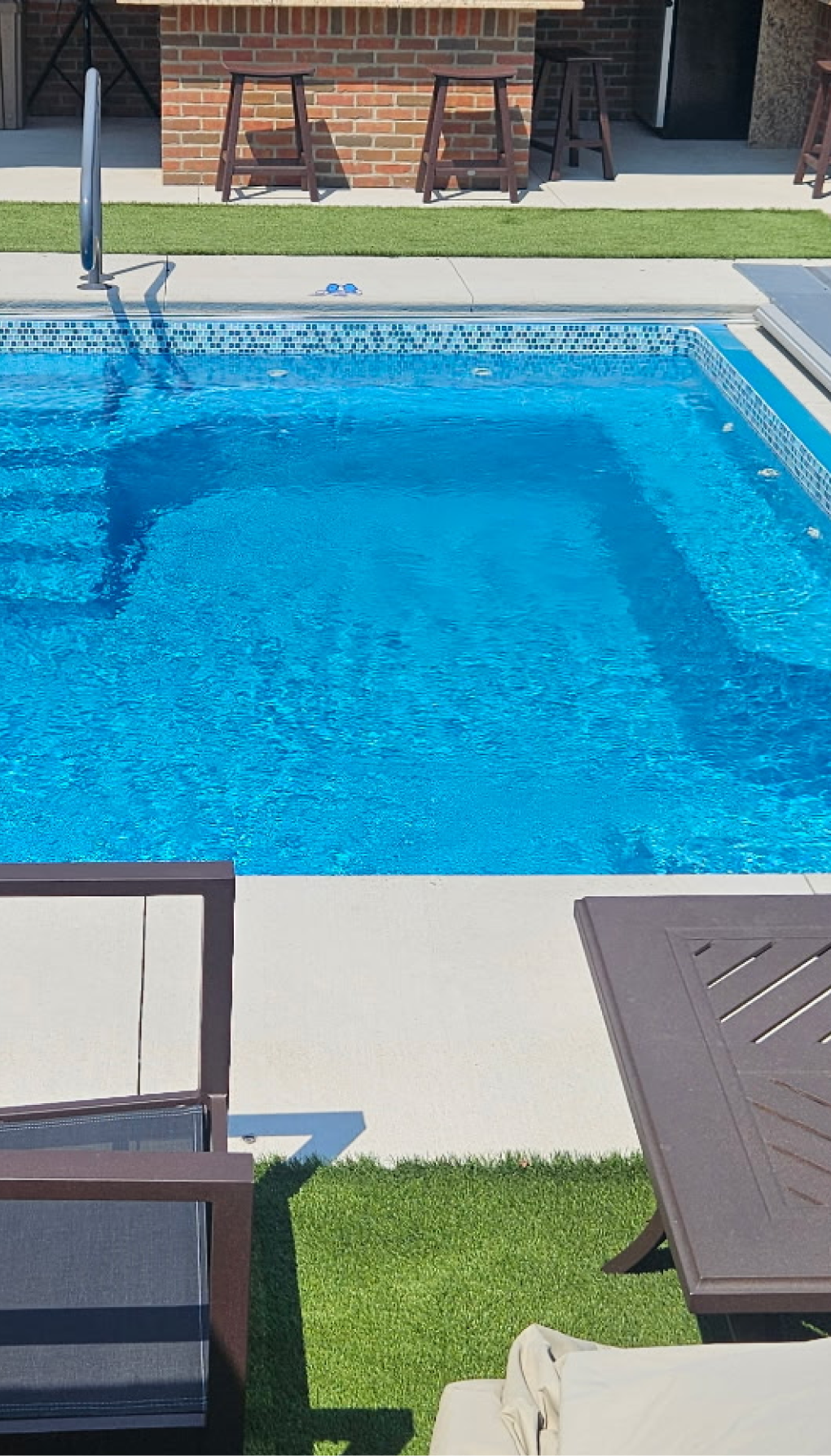

Gunite Pools
BEST FOR
Properties and homeowners that require the greatest level of design flexibility.
Gunite changes the conversation because you are no longer choosing a premanufactured shell or working within the same structural system as a vinyl liner pool.
The pool can be designed around the property.
That makes gunite well suited for custom dimensions, freeform or geometric layouts, integrated steps and ledges, attached inground spas, and properties where the pool needs to respond closely to the architecture or available space.
Cost
Typically the highest initial investment of the three construction methods because of the labor, materials, and customization involved.
Timeline
Gunite has the longest and most involved construction process of the three options. Weather, inspections, curing, finishes, and project complexity all affect the schedule.
Durability
Gunite creates a permanent pool structure intended for long-term use. The interior finish is not permanent, however, and resurfacing becomes part of long-term ownership.
Customization
This is gunite’s biggest advantage. Shape, dimensions, depth, steps, ledges, spas, and other elements can be designed specifically for the project rather than selected from a manufacturer catalog.
Maintenance
The exact requirements depend partly on the interior finish and equipment selected. Gunite surfaces will eventually require resurfacing as they age.
Vinyl vs. Fiberglass vs. Gunite at a Glance
Initial Investment
Build Speed
Design Flexibility
Interior Surface
Long-Term Consideration
Good Fit When
Vinyl Liner
Generally lowest of the three
Faster than gunite
High Flexibility
Replaceable vinyl liner
Periodic liner replacement
You want flexibility and a lower starting investment
Fiberglass
Varies by model and project scope
Generally fastest
Limited to available shell models
Smooth fiberglass
Shell access and model constraints
Speed and lower-maintenance ownership are priorities
Gunite
Generally highest
Longest construction process
Highest Flexibility
Applied pool finish
Future resurfacing
The design needs to be highly customized
What Happens After You Decide to Build?
A major concern with any pool project is not knowing what happens after you sign a contract.
Who handles the permits? When does excavation start? When do you make selections? What has to happen before there is water in the pool?
DRS Pool & Spa uses a clear construction path so you know where the project stands.
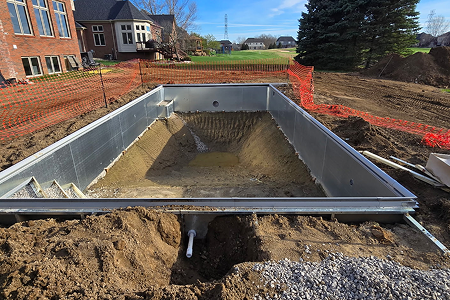
STEP 1
Consultation
We start at the property.
We look at the available space, access, grade, existing structures, and what you want from the pool. This is also where we begin narrowing down whether vinyl liner, fiberglass, or gunite makes the most sense.
After the property visit, your free estimate is delivered that same day.

STEP 2
Design
Once the direction is established, we work through the pool type, size, shape, placement, equipment, decking, and applicable features. For fiberglass projects, this includes selecting the appropriate Latham or Leading Edge shell and confirming that the model can be delivered to the site. For vinyl liner projects, it includes pool configuration and liner selections. Gunite projects allow the design to become more specific to the property.

STEP 3
Permits
We pull the permits.
Pool permitting can vary based on the municipality and project. DRS Pool & Spa handles the required permitting for the construction projects we manage rather than handing homeowners a list and asking them to figure it out.
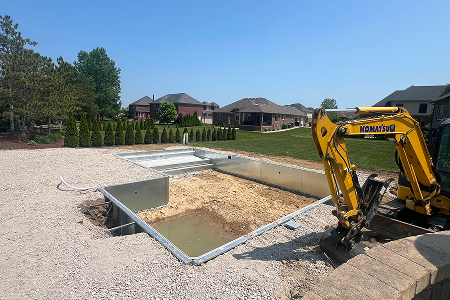
STEP 4
Build
Once approvals are in place and the project is scheduled, construction begins.
The exact work depends on the pool type, but this is where excavation, structure or shell installation, plumbing, equipment, electrical coordination, decking, finishes, and other contracted elements come together.
You will know what is being built and what stage the project is in.
STEP 5
Fill & Start-Up
A pool is not finished simply because there is a hole in the ground with water in it.
The final stage includes filling the pool and getting the system running so the equipment and pool can begin operating as intended. From there, you can start learning the routines that come with owning your specific type of pool.
We Handle the Details That Homeowners Should Not Have to Guess About
Building a pool involves more than choosing a shape.
There are site conditions to evaluate. Permits to pull. Equipment to size. Excavation and construction to coordinate. And in Michigan, the finished pool also has to live through repeated freeze-thaw cycles and months when it is not being used.
DRS Pool & Spa has been family-owned and based in Oxford, Michigan since 2013. Our team builds pools here, for Michigan properties and Michigan seasons.
We also operate an 8,500-square-foot showroom in Oxford. It is not where the project begins. Your property is. But it gives DRS Pool & Spa a permanent local home base and gives homeowners a place to see many of the products and materials that go into a pool project.
Planning for the Cost of Your Pool
There is no useful one-price answer to “What does an inground pool cost?”
Pool type is only the starting point.
Size, shape, property access, excavation conditions, decking, equipment, attached spas, water features, site work, and finish selections can all change the final investment.
That is why DRS Pool & Spa starts by looking at the property instead of advertising a stripped-down starting price that may have little to do with the pool you actually want to build.
Financing is available through three national lending partners: HFS Financial, Lyon Financial, and Viking Capital, subject to lender approval and terms.
New Pool Construction FAQs
How long does it take to build an inground pool in Michigan?
It depends heavily on the type of pool, permitting, site conditions, weather, and project scope. Fiberglass can generally be installed faster because the shell arrives manufactured. Vinyl liner construction is also typically faster than gunite. Gunite requires a longer, multi-stage
construction process. Your project schedule should be based on your actual pool rather than a generic promise.
Which pool type is the least expensive?
Vinyl liner pools generally have the lowest initial investment of the three options. Fiberglass and gunite costs depend on the model, size, access, finishes, and overall project scope. Gunite is generally the highest-investment option because of its construction method and customization.
Does DRS Pool & Spa pull the permits?
Yes. We handle the required permits for the pool construction projects we manage.
Can I add an attached spa to my pool?
Yes. Attached inground spas can be incorporated with vinyl liner, fiberglass, and gunite pool projects depending on the design. DRS Pool & Spa does not sell portable or freestanding retail spas.
Where does DRS Pool & Spa build pools?
DRS Pool & Spa is based in Oxford, Michigan and builds pools throughout Oakland, Macomb,
Lapeer, Genesee, Livingston, and Wayne counties.
Start With the Pool That Makes Sense for Your Property
You do not need to know whether vinyl, fiberglass, or gunite is right before you contact us.
That is part of the conversation.
We will look at the property, hear what matters to you, and explain the differences without automatically steering you toward the most expensive option.
Then you can make the decision with real information about your site and your project.
